Soft Brushstrokes: Styling Your Wedding Day
There is an undeniable romance associated with the fluidity of watercolor art. It mimics the unpredictable beauty of nature, blending soft edges with vibrant saturation to create imagery that feels both organic and artistic. When this aesthetic is applied to confectionery imagery, specifically wedding cakes, the result is a visual asset that transcends standard photography. We are looking at a design element that captures the essence of celebration without being tied to a specific trend. For graphic designers, event planners, and small business owners, these artistic renderings offer a versatile foundation for creating cohesive and emotionally resonant branding materials.
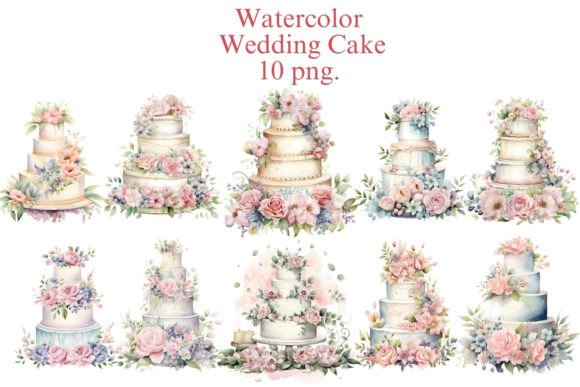
The specific set we are discussing today features ten high-resolution PNG files, each measuring a generous 3000x3000 pixels at 300 DPI. This technical specification is crucial for anyone working in print-on-demand or high-end stationery. You aren't just getting a low-resolution thumbnail suitable only for a blog post; you are acquiring a production-ready asset. The transparent backgrounds are a game-changer, allowing these delicate illustrations to be layered over textured papers, solid brand colors, or complex backgrounds without the hassle of masking or clipping paths. Whether you are designing a physical invitation or a digital mockup, the quality ensures your final product looks professional and crisp.
The Allure of the Hand-Painted Aesthetic
Why choose a watercolor illustration over a standard vector graphic or a photograph? The answer lies in emotional connection. Photography captures reality, while watercolor captures a feeling. A hand-painted cake illustration suggests artisanal quality, care, and a personal touch. This is particularly effective for wedding-related businesses. Bakers, for instance, can use these designs to create menus or brochures that highlight their custom work without needing to photograph every single cake variation. The soft washes of color evoke a sense of whimsy and elegance that rigid digital graphics often struggle to achieve.
Visually, the "bleed" of watercolor paint creates a focal point that draws the eye naturally. In a sea of sharp, geometric digital content, the irregular edges of these brushstrokes provide a moment of visual rest. This makes the imagery incredibly effective for hero banners on websites or the cover of a portfolio. It signals to the viewer that the brand values creativity and aesthetics. Furthermore, the lack of watermarks in the final deliverable means the design integrates seamlessly into your work, looking like an original commission rather than stock art.
From Invitation to Brand Identity
The utility of high-quality clipart extends far beyond simple decoration. For a stationery designer, these ten distinct cake illustrations offer a toolkit for creating a full suite of wedding collateral. Imagine a cohesive look where the save-the-date features a subtle sketch of the cake, the invitation features the full watercolor rendering, and the thank-you cards use a cropped section of the frosting detail. This level of visual consistency builds a professional narrative for the couple’s big day. It turns disparate pieces of paper into a unified brand experience.
For entrepreneurs, the application is equally potent. If you run a bakery or a wedding planning service, your visual identity needs to communicate your specific style. Are you modern and minimalist? Are you vintage and rustic? The soft textures of these watercolor assets can be manipulated to fit various vibes depending on the background and typography used alongside them. By using a consistent artistic style across your social media headers, business cards, and packaging, you reinforce brand recognition. Customers begin to associate that specific "look" with your quality of service.
Technical Versatility: Beyond the Screen
One of the most significant advantages of this specific design set is its compatibility with various production methods. The file specifications—300 DPI and large dimensions—make these assets ideal for sublimation. If you are a crafter selling mugs, tote bags, or pillows, you know that image resolution is the difference between a blurry mess and a sharp, sellable product. These files are optimized for DTG (Direct to Garment) printing and screen printing transfers, meaning you can take the digital art and physically manifest it on merchandise.
Consider the market for bridal party gifts. A tote bag featuring a delicate watercolor cake sketch makes for a charming bridesmaid gift. A framed print of a cake illustration can serve as kitchen wall art or a wedding keepsake. Because the license permits commercial use for finished products, you are free to monetize these designs on platforms like Etsy or at local craft fairs. The restriction on reselling the digital file itself is standard and fair, but the freedom to create and sell physical goods is where the real value lies for makers and small business owners.
Strategic Implementation in Marketing
When incorporating these illustrations into your marketing strategy, think about balance. Watercolor art is visually "busy" compared to flat graphics. Therefore, pairing it with the right typography is essential. A bold, sans-serif font can provide a modern counterpoint to the soft, organic nature of the cake illustration. Conversely, a delicate script font can amplify the romantic, fairytale aspect. The key is to ensure that the text remains legible. Avoid placing busy text directly over the most saturated parts of the watercolor image; instead, use the illustration as a standalone element or a background with low opacity.
Social media is another arena where these assets shine. Instagram and Pinterest are highly visual platforms that favor aesthetic consistency. You can use these cake illustrations to break up text-heavy posts, create "quote of the day" graphics relevant to love and celebration, or announce seasonal sales. Because the background is transparent, you can easily drop them into templates in Canva or Adobe Express. This saves you time and ensures that your feed maintains a polished, curated look that attracts followers and potential clients.
Choosing the Right Design Assets
When selecting design assets for your library, versatility should be a top priority. A single-purpose graphic limits your creative potential, whereas a set of high-quality, thematically linked images allows for growth. This collection of watercolor cakes serves multiple functions: it acts as a standalone illustration, a texture source, and a branding element. It is an investment in your creative toolkit that pays dividends every time you use it to elevate a project from "good enough" to "visually stunning."
Ultimately, the goal of any design element is to communicate a message more effectively. The message here is one of sweetness, celebration, and artistry. By integrating these watercolor textures into your work, you aren't just adding a picture of a cake; you are adding a layer of sophistication and emotional depth to your designs. Whether you are a hobbyist scrapbooking a friend's wedding or a professional designer building a client's brand, these assets provide the flexibility and quality needed to produce exceptional work.